 Wire Harnesses & Cable Assembly Manufacturer Services
Submit your request to us
Fill in your details and we’ll get back to you in 24 Hours
Search productSearch post
Board layout discipline
Electrical test path available
RFQ review target
Forced MOQ for evaluation builds
Core Pillars
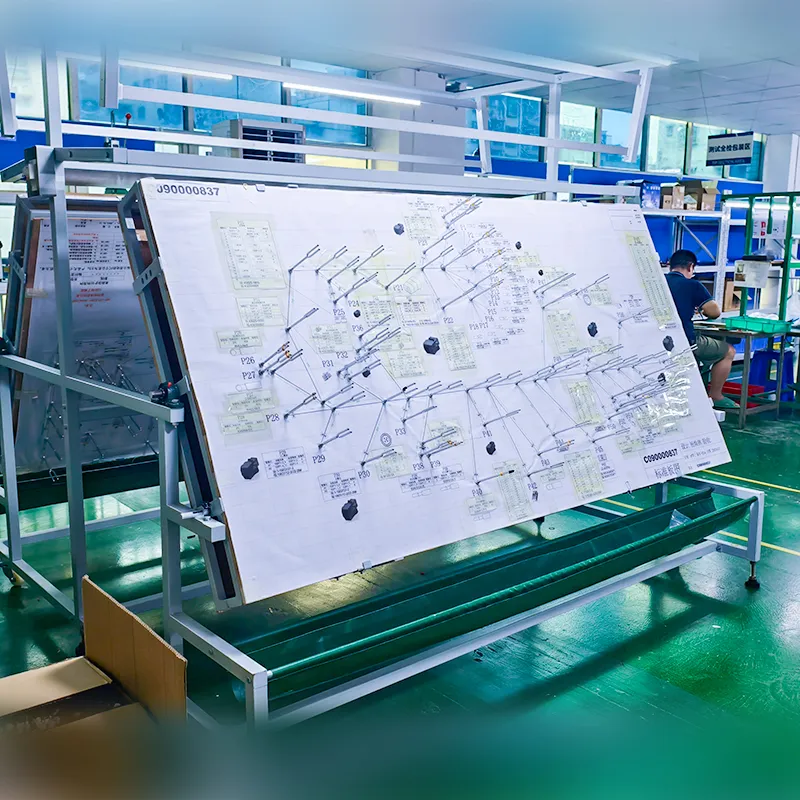
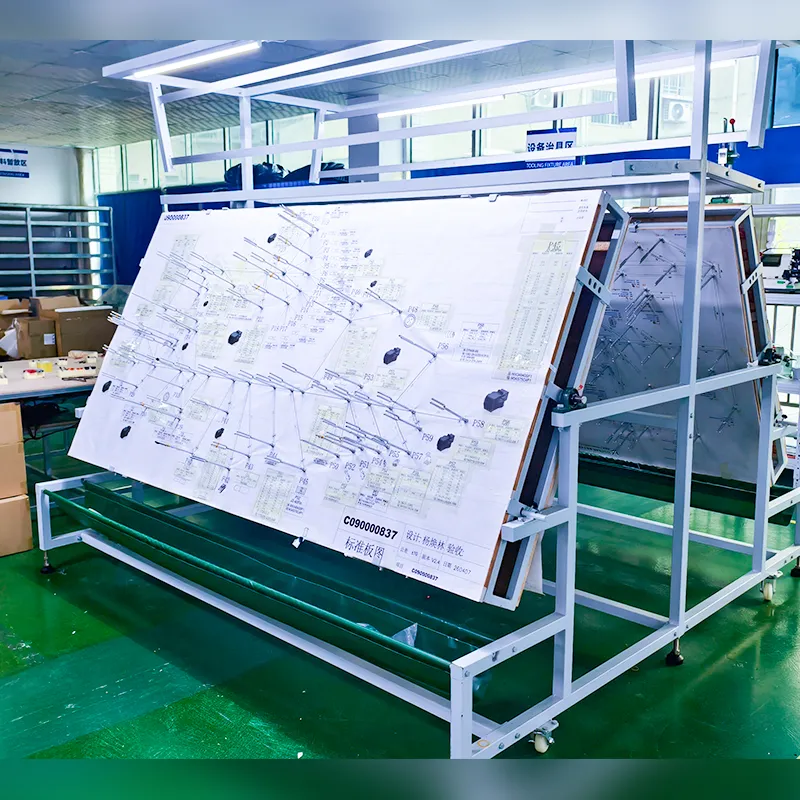
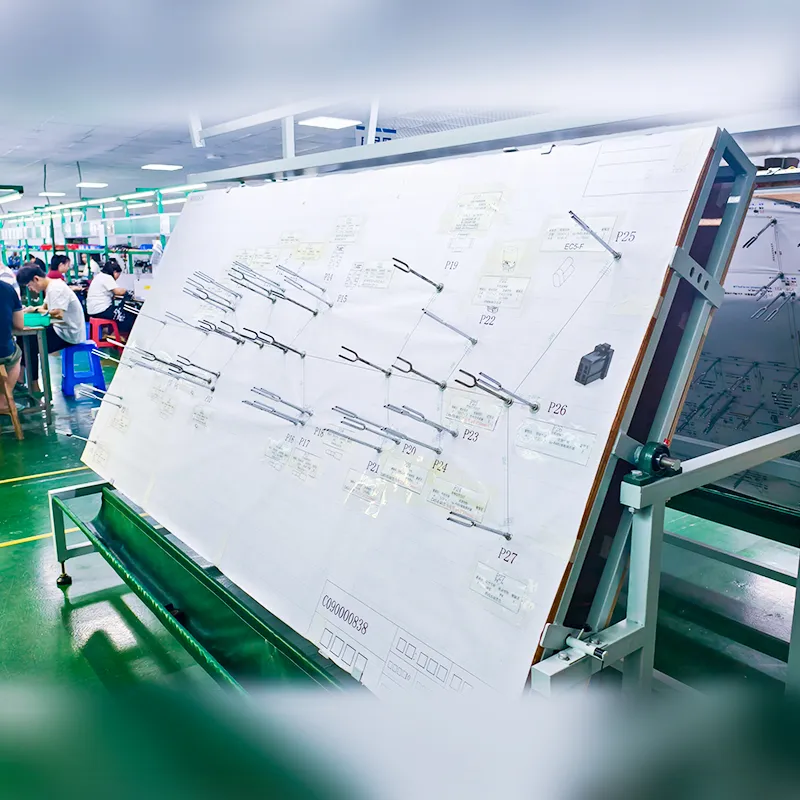
The board is valuable because it controls geometry, routing logic, and operator consistency at the same time

Failure Prevention
| Checkpoint | Common Failure | Our Control |
|---|---|---|
| Board geometry | The drawing shows branch lengths but not a practical flat-board layout, so operators improvise wire paths and crossover order. | We translate the harness into a board-ready layout with fixed branch exits, peg references, and documented routing logic before release. |
| Connector orientation | A harness may pass continuity while still being hard to install because connector clocking and breakout direction were never controlled on the board. | Board references and visual criteria lock connector orientation, branch angle, and strain-relief placement to the approved build method. |
| Revision stability | Late ECO changes move one breakout or component family, but the board, operator instructions, and inspection points are not updated together. | We treat board changes as controlled release items so the fixture definition and production documents stay synchronized. |
| Transfer to repeat production | A pilot lot built by experienced technicians looks fine, but repeat operators cannot reproduce branch spacing or routing without a disciplined board standard. | The approved board layout becomes part of the manufacturing package for pilot, ramp, and recurring production lots. |
*This is also why first-article discipline matters. Public background on first article inspection centers on proving the released build before larger production depends on it. In harness work, that proof includes geometry and routing, not just an electrical pass result.
Fit Criteria
This capability is for buyers who need board-backed harness production control, not a generic overview of tooling or electrical assembly
Inspection Protects the Quote
Buyers searching for a wire harness board supplier are usually not looking for a piece of plywood with pegs. They need a supplier that can convert harness geometry into a controlled production method. That is why this page sits alongside our broader tooling, design support, and testing capabilities. The commercial issue is repeatability: can the next 500 harnesses match the approved branch routing and installation shape, not just the electrical net list?
In wire harness manufacturing, boards are the bridge between drawing intent and operator execution. Public references on cable harnesses and production jigs describe the same core principle: a fixture exists to hold parts in the right relationship during assembly so quality does not depend on guesswork. For harnesses, that relationship includes branch length, crossover order, breakout spacing, and connector clocking.
A complex harness can look simple when one experienced technician builds it from tribal knowledge. That approach collapses during repeat production. Our board-driven release method ties together crimp control, wire preparation, continuity testing, and labeling and packaging with one stable routing reference.
This is especially useful for supplier transfers and pilot-lot scale-up. If your incumbent source can build an acceptable first sample but the repeat lots drift in breakout position, crossover order, or connector angle, the underlying problem is usually uncontrolled board logic. Fixing that at the release stage is cheaper than sorting finished harnesses after shipment.
Six-Step Process
The workflow is built for engineering and procurement teams sourcing repeatable harness geometry, not just one-off samples
Buyer Scenarios
Choose this page when repeatable harness geometry is part of the buying requirement
Display
100% real on-site photos. Video inspection available upon request
100% real on-site photos. Video inspection available upon request
Common Questions
A wire harness board, also called a nail board or form board, is a flat fixture used to hold branch paths, breakout positions, and connector orientation while a harness is assembled. It converts a drawing into a repeatable physical reference so multiple operators can build the same harness geometry consistently.
The tooling page covers the broader ability to design fixtures, gauges, and production aids. This wire harness board page is a commercial capability focused on using board layout and form-board control to release repeatable harness production. The buying intent is more specific: can the supplier convert my harness design into a board-defined manufacturing standard?
A board is usually the better choice when the harness has multiple branches, controlled breakout spacing, fixed orientation requirements, or installation-sensitive geometry. Simple point-to-point leads may not need a dedicated board. As complexity rises, the board becomes one of the main tools for keeping repeat builds stable.
Yes, but the quote is stronger when supported by a drawing, wire list, or board layout. If only a physical sample exists, we can review it for routing logic, branch dimensions, connector orientation, and manufacturability before proposing a controlled build method.
No. The board controls geometry and repeat assembly flow, while electrical testing verifies continuity, shorts, pinout, and other defined acceptance criteria. Both matter. A harness can be electrically correct yet still fail installation if board control is weak.
Most programs rely on ISO 9001 quality controls plus workmanship expectations associated with IPC/WHMA-A-620. The exact dimensional tolerances, routing rules, and electrical tests come from the customer drawing, the application environment, and the approved production release package.