 Wire Harnesses & Cable Assembly Manufacturer Services
Focus on one-stop solutions
for wire harness
Premier Wiring Harness integration & Customization manufacturing
TRUSTED BY 500+ WORLDWIDE BRANDS OVER OUR 20-YEAR JOURNEY
Search productSearch post
Premier Wiring Harness integration & Customization manufacturing
TRUSTED BY 500+ WORLDWIDE BRANDS OVER OUR 20-YEAR JOURNEY
In July 2025, the European Commission formally adopted revised POPs legislation, slashing PBDEs limits from 500mg/kg to 10mg/kg while eliminating exemptions for recycled materials. This move represents the EU’s latest escalation in environmental controls for electronics, following RoHS, WEEE and packaging directives.
For wiring harness producers, this quiet material revolution has transitioned from a “future challenge” to a make-or-break threshold for export survival. The industry now confronts:
Strategic Implications:
Industry Alert: The 10mg/kg ceiling effectively bans conventional flame-retardant formulations, mandating innovation in halogen-free materials and precision separation technologies for recycled content.
Wiring harnesses, as the core connective components of electronic/electrical equipment, now face multi-layered EU environmental regulations targeting both material selection and recycling design:
The latest RoHS 2.0 Directive (2011/65/EU) and its amendments have expanded restricted substances to 10 categories. In addition to traditional heavy metals (lead, cadmium, mercury, hexavalent chromium), four new phthalates (DEHP, DBP, BBP, DIBP) have been added, all with a strict concentration limit of ≤0.1%.
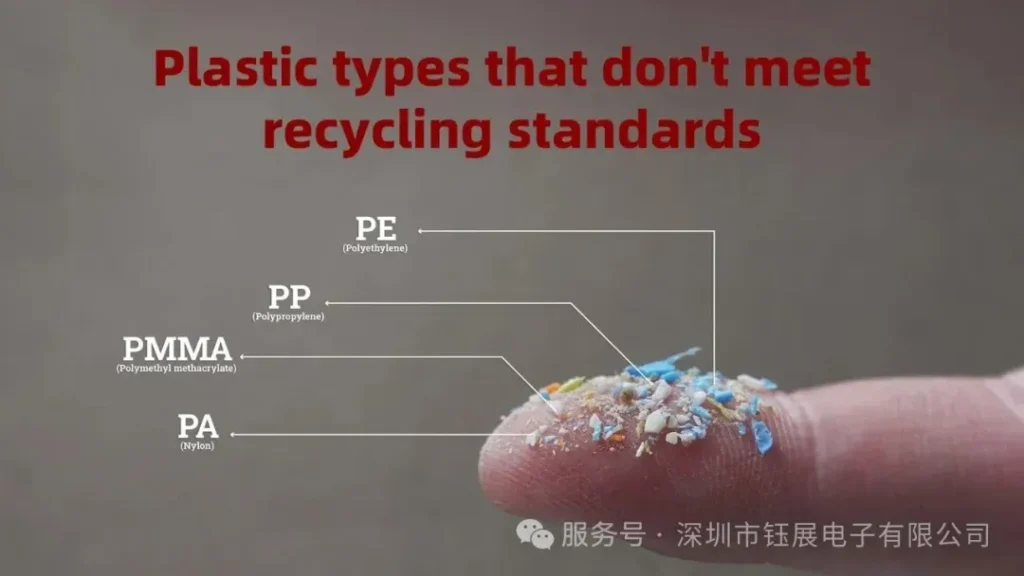
This compels wiring harness manufacturers to thoroughly reevaluate and restructure their supply chains to ensure full compliance with environmental standards. Particularly for insulation and jacketing materials, companies must identify alternative solutions—such as halogen-free flame retardants or bio-based plasticizers. However, adopting these new materials presents dual challenges of increased costs and heightened technical barriers.
The lead content restrictions on solder joints introduce fresh obstacles to conventional production processes. Manufacturers may need to implement advanced welding technologies or explore the feasibility of lead-free solder alternatives. These comprehensive changes not only test companies’ R&D capabilities but also impose more stringent requirements on their quality control systems.
The EU’s Waste Electrical and Electronic Equipment regulation enforces category-specific recycling quotas:WEEE Compliance Standards for Wiring Harnesses
| Requirement | Consumer | Industrial | Automotive (2025) |
|---|---|---|---|
| Material Recovery | 75% | 80% | 85% |
| Component Recycling | 65% | 75% | TBD |
| Design Documentation | EN 50625 | IEC 62430 | ISO 22628 |
This mandates wiring harness manufacturers to fundamentally rethink product design, prioritizing material disassembly and recyclability from the outset. Key implementation measures include:
While initial costs may increase by 15-20%, the transition drives:
This directive mandates that the total concentration of four heavy metals (lead + cadmium + mercury + hexavalent chromium) in packaging materials must not exceed100 ppm. Wiring harness packaging components—including adhesive tapes, cable ties, and plastic bags—must comply with this standard while also achieving an overall recycling rate of 60% or higher.

| Risk Area | Preventive Measure |
|---|---|
| Heavy Metal Contamination | XRF screening at receiving inspection |
| Recycling Rate Shortfall | Partner with certified waste handlers |
| Documentation Gaps | Digital compliance passports (Blockchain based) |
| Directive Name | Core Requirements | Wire Harness Related Provisions | Penalty Risks |
|---|---|---|---|
| RoHS 2.0 | 10 categories of hazardous substances ≤0.1% | Bromine prohibited in insulation layers, phthalates prohibited in coatings | Product recall + fine of 4% of annual turnover |
| WEEE | Recycling rate 75%-80% | Connectors must be detachable, material labeling required | Market ban |
| Packaging Directive 94/62/EC | Σ(Lead + Cadmium + Mercury + Hexavalent Chromium) <100ppm | Heavy metal control for cable ties/tape | Border seizure |
| EUP | Full life cycle energy consumption assessment | Thermoplastic materials to replace thermosetting materials | Carbon tariff imposition |

Confronting the mounting pressure of increasingly stringent environmental regulations, global leading automotive wiring harness manufacturers have fully transitioned to three strategic material substitution pathways, with the most critical being revolutionary changes in insulation layer materials:
While traditional FEP (fluorinated ethylene propylene) materials offer excellent high-temperature resistance (up to 300°C), their fluorine-containing molecular structure severely violates RoHS Directive restrictions on hazardous substances. In response, Chinese Patent CN201210488187 proposes a comprehensive innovative solution:
| Property | Legacy FEP | Novel XLPO (Patent Solution) |
|---|---|---|
| Temperature Resistance | 300℃ continuous | 250℃ (with 400℃ peak) |
| Dielectric Strength | 80 kV/mm | 75 kV/mm (±5%) |
| Flex Life | 50,000 cycles | 80,000 cycles |
| RoHS Compliance | Non-compliant (F) | Fully halogen-free |
After two years of intensive R&D and testing, a leading Japanese wiring harness manufacturer in the Yangtze River Delta has developed a high-performance jacketing formulation with the following optimized composition and functional ratios:
– High-Density Polyethylene (HDPE) 24%
→ Serves as the structural backbone, providing mechanical strength and dimensional stability
– Polyolefin Elastomer (POE) 12%
→ Dramatically improves low-temperature flexibility (-50°C) and impact resistance
– Ethylene-Vinyl Acetate (EVA) 10%
→ Enhances melt flow index (MFI=3.5g/10min) for stable extrusion processing
– Eco-Friendly Phosphorus-Nitrogen Composite Flame Retardant 50%
→ Achieves UL VW-1 certification through synergistic flame inhibition mechanism
– Specialty Modifiers & Silane Coupling Agents 4%
→ Strengthens filler-matrix interface bonding, increasing tensile strength by 40%
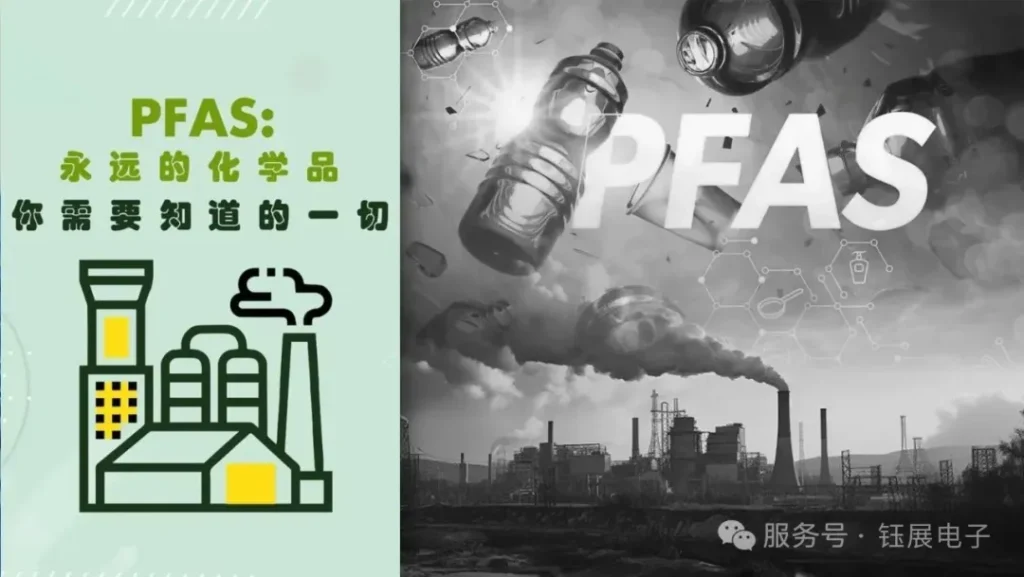
In response to the EU’s impending comprehensive ban on PFAS (per- and polyfluoroalkyl substances) by 2027, extensive material testing has identified PPS (polyphenylene sulfide) as an outstanding alternative to traditional PTFE insulation, demonstrating the following superior characteristics:
Key Advantages of PPS Material
– Exceptional Thermal Resistance
→ Maintains stable performance at continuous 260°C, matching PTFE’s thermal stability
→ Ideal for high-temperature applications (e.g., engine bay wiring, EV battery systems)
– Enhanced Processability
→ Superior melt flow properties compared to PTFE, enabling:
• Thinner insulation layers (down to 0.05mm) via precision extrusion
• 30% faster production speeds due to improved flow dynamics
• Eco-Friendly End-of-Life Benefits
→ 150°C thermal decomposition gap vs. copper enables:
• Efficientphysical separation during recycling
>90% metal recovery rate (vs. 60% with PTFE)
→ Fully aligns with EU Circular Economy Action Plan
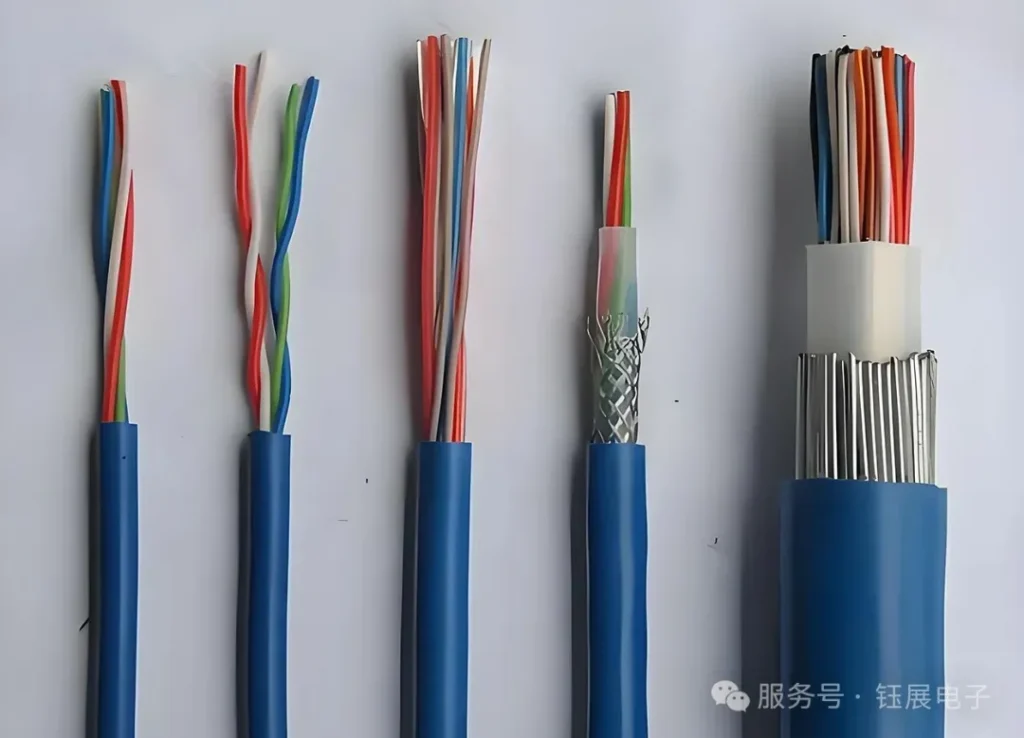
Under increasingly stringent environmental regulations, material substitution alone can no longer meet wiring harness recycling rate requirements. Systemic breakthroughs in product structure design are now essential. The specific implementation pathways are as follows:
– Advanced Thermoplastic Polyurethane (TPU) Injection Molding
→ Exhibits superior mechanical properties (tensile strength: 45 MPa) and eco-compliance
→ Maintains stable performance during recycling (≤3% property degradation after 5 cycles)
→ Key advantages:
– Structural Optimization
→ Achieves dual benefits:
→ Performance validation:
| Metric | Traditional Design | New Design | Improvement |
|---|---|---|---|
| Metal Insert Content | 35% by weight | 12% by weight | 66% ↓ |
| Disassembly Time | 8 minutes | 90 seconds | 81% ↓ |
| Material Recovery Rate | 55% | 77% | 40% ↑ |
Sumitomo Electric’s modular solution for connector recycling sets an industry benchmark, with core innovations across three technical dimensions:
– Patented Snap-fit Mechanical Interface
→ Enables damage-free separation of copper braided shielding from engineered plastic components
→ 60% faster disassembly vs. traditional soldered/glued designs
→ Maintains 100% component reusability (validated through 10,000-cycle tests)
– Laser-Etched Material Passporting
→ Permanent marking of polymer types (e.g., “HDPE-HD” for high-density polyethylene)
→ Includes key parameters:
Melt flow index
Flame retardant class
Recycled content percentage
→ 99.8% sorting accuracy (vs. 85% with infrared spectroscopy)
Closed-Loop Recycling System Construction
Best Practices from European Automotive Leaders:
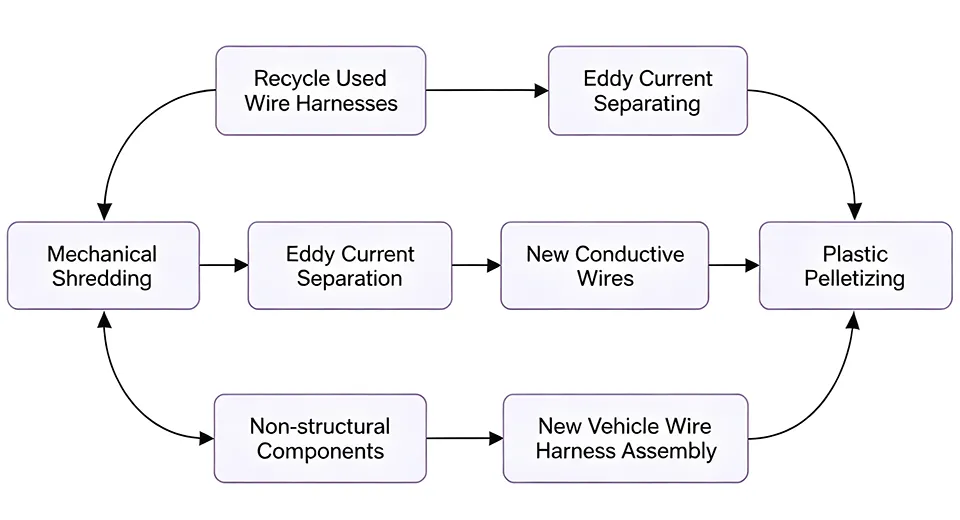
This system achieves a 92% material recycling rate, far exceeding regulatory requirements.
To ensure products meet global environmental regulations, a robust testing framework must be established:
– XRF Screening (Heavy Metal Detection)
→ Strict compliance with IEC 62321-1:2023
→ Detection threshold: 1 ppm for Cd/Pb/Hg/Cr⁶⁺
– GC-MS Analysis (Phthalate Detection)
→ Aligned with IEC 62321-8:2023
→ Coverage: DEHP/DBP/BBP/DIBP at ≤0.1%
Deploy an intelligent Supply Chain Management (SCM) system for end-to-end automation:
– Automated Documentation
→ Instant Declaration of Conformity (DoC) generation
→ AI-driven clause updates for REACH/RoHS/POPS
– Risk Monitoring
→ Real-time supplier material alerts (3-tier escalation)
→ Blockchain-verified test reports
– Data Visualization
→ Interactive dashboards showing:
• Batch compliance status
• Trend analysis of hazardous substances
• Supplier performance scoring
System Advantages:
✓ 40% faster compliance verification
✓ 100% paperless audit trails
✓ Full traceability from raw materials to finished products
For the key control points of the irradiation cross-linking process: Process parameters and deviation consequences table
| Process | Parameter range | Deviation consequences |
|---|---|---|
| Irradiation dose | 200 – 400 KGY | <200 KGY: Insufficient heat resistance>400 KGY: Material embrittlement |
| Irradiation temperature | Room temperature ±5℃ | High temperature leads to uneven cross-linking degree |
| Oxygen concentration | <50 ppm | Excessive levels cause oxidative degradation |
Collaborative Recycling Alliance: Building a Regional Circular Economy Model
For small and medium-sized wiring harness manufacturers seeking sustainable breakthroughs, the following three strategic dimensions are critical:
– Join regional e-waste management systems (e.g., East China E-Waste Processing Center) through strategic partnerships
– Achieve economies of scale via shared infrastructure and technology exchange
– Reduce per-unit compliance costs by 30-50% through collective processing
– Apply for RoHS Article 7 exemptions for specialized applications:
→ Medical equipment wiring harnesses
→ Military/aerospace-grade cables
– Secure leaded solder usage approvals during technology transition periods
– Gain 12-24 months for phased material substitutions
– Engage in “Automotive Harness Recycling Technical Standards” working groups
– Advocate for progressive compliance timelines that consider SME capabilities
– Balance environmental goals with operational feasibility through:
→ Tiered implementation schedules
→ Cost-sharing R&D initiatives
Success Metrics:
✓ 40% lower recycling costs via shared facilities
✓ 2-3 year extended compliance windows for critical applications
✓ 15% market advantage through early standard adoption
| Category | Full Content |
|---|---|
| Applicable Standards | • “Technical Specification for Traceability of Recycled Parts and Remanufactured Parts from End-of-Life Vehicles” (GB/T 45084-2024) • “General Technical Specification for Recycled Parts from End-of-Life Vehicles” (GB/T 45193-2024) • “Interim Measures for the Management of Automobile Parts Remanufacturing” (NDRC) |
| Main Recycling Technologies | 1. Mechanical Crushing and Sorting Method (Mainstream) • Process: Dismantling → Crushing (Copper Wire Granulator) → Sorting (Gravity/Magnetic/Electrostatic) • Advantages: High efficiency, environmentally friendly (dry physical dissociation) 2. Other Technologies (Limited) • Incineration Method (Prohibited) • Chemical Method (High environmental risk) • Cryogenic Method (Experimental stage) |
| Recycling Equipment Requirements | • Core Equipment: Copper Wire Granulator (e.g., MG150 model), Magnetic Separator, Vibrating Screen • Performance Standards: Copper recovery rate ≥99.8%, plastic purity ≥99.7% • Environmental Design: Dustproof, noise reduction, compliant with emission standards |
| Environmental and Safety Management | • Pollution Prevention: Prohibition of incineration/wet sorting; storage to prevent oil leakage • Traceability Management: Record sources, processing procedures, and flow of used parts (e.g., “Anxin Check” system) |
| Industry Application Cases | • Toyota “Car to Car”: Closed-loop recycling system, annual production of 1,000 tons of recycled copper • China Standardization Practice: CATARC promotes testing and traceability systems for recycled parts |
| Future Trends | • Development of intelligent sorting equipment • Improvement of full lifecycle data tracking systems |
While 80% of domestic wiring harness manufacturers lament the EU’s “green trade barriers,” forward-thinking companies are already reaping rewards:
– A specialized “Little Giant” enterprise in the Yangtze River Delta secured an exclusive 2024 supply contract for Volkswagen’s MEB platform with its TPU-integrated connector design.
– Qingdao Sanyuan Group achieved a 15% price premium for its patented halogen-free thermoplastic automotive cables.
The EU’s escalating environmental directives are forcing the industry to abandon cutthroat pricing and embracetechnology-driven collaboration. The wiring harness material revolution has only just begun – companies treating RoHS as an innovation catalyst are building unassailable competitive advantages.
Over the next five years, mastery of two core competencies will determine global leadership in premium wiring harness markets:
– Design for disassembly (DfD) architectures
– Regenerated material adoption cycles
This quiet material revolution is already redrawing industry boundaries. Sustainability is the passport to the future – the green transformation of the wiring harness sector represents nothing less than full-value-chain metamorphosis, from molecular innovation to systemic reinvention.

The choice is clear: Adapt now as pioneers, or struggle later as followers. The moat is being dug today.
Shenzhen Yuzhan Electronics, founded in 2007, is a highly capable manufacturer specializing in high-quality customized wiring harness integration, providing one-stop integrated wiring harness solutions for globally renowned brands.
Yuzhan Electronics holds multiple invention patents and technical achievements, backed by 17 years of industry expertise in engineering development and production management. Equipped with a comprehensive production system, advanced manufacturing, and testing facilities the company has obtained ISO 9001, IATF 16949 management system certifications, as well as international approvals including 3C, UL, CSA, VDE, and CE.
The company’s products are widely used in new energy vehicles (NEVs), energy storage systems, construction machinery, smart appliances, intelligent robotics, communication networks, medical devices, precision instruments, and other industries. Its products have been exported to the U.S., Europe, Southeast Asia, South America, and other regions.
Over the next decade, Yuzhan Electronics is committed to building a high-tech, high-quality growth engine, focusing on smart energy and new energy sectors for aggressive upward expansion. Currently, the company serves industries such as NEVs, energy storage batteries, solar PV, smart robotics, smart home systems, and intelligent manufacturing
Shenzhen Yuzhan Electronics – wire harness supplier for Pudu, Keenon, Zerith, YOUIBOT. 5 values: supply security (3-month connector stock, 50ppm defect rate), cost optimization (12.7% reduction), innovation co-creation (14-day sampling), financial...
View details
Vehicle-mounted photovoltaics feasibility analysis for NEVs – efficiency bottleneck (23% silicon cells, <2kWh/h), cost barrier (flexible panels 3-5× cost, wiring harness up to ¥10k), safety compliance (automotive-grade certification, fire risks...
View details
UK zero-emission cold chain tech firm Sunswap partners with Shenzhen Yuzhan Electronics to develop custom premium wiring harnesses for electric refrigeration units. UL & IATF16949 certified cable assemblies power global green cold chain equipment....
View details
China's new EV wiring harness standards GB/T 37133-2025 & QC/T 1067-2023 mandate terminal crimping ≤0.1mm, contact resistance ≤1mΩ, V5 vibration, IP6K9K, LCP/PA66 materials. Factories need MES, laser crimpers, environmental labs (¥500k/testers). C...
View details